In 1961, an NFL exhibition game in Roanoke changed the city and professional football.
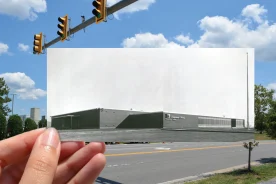
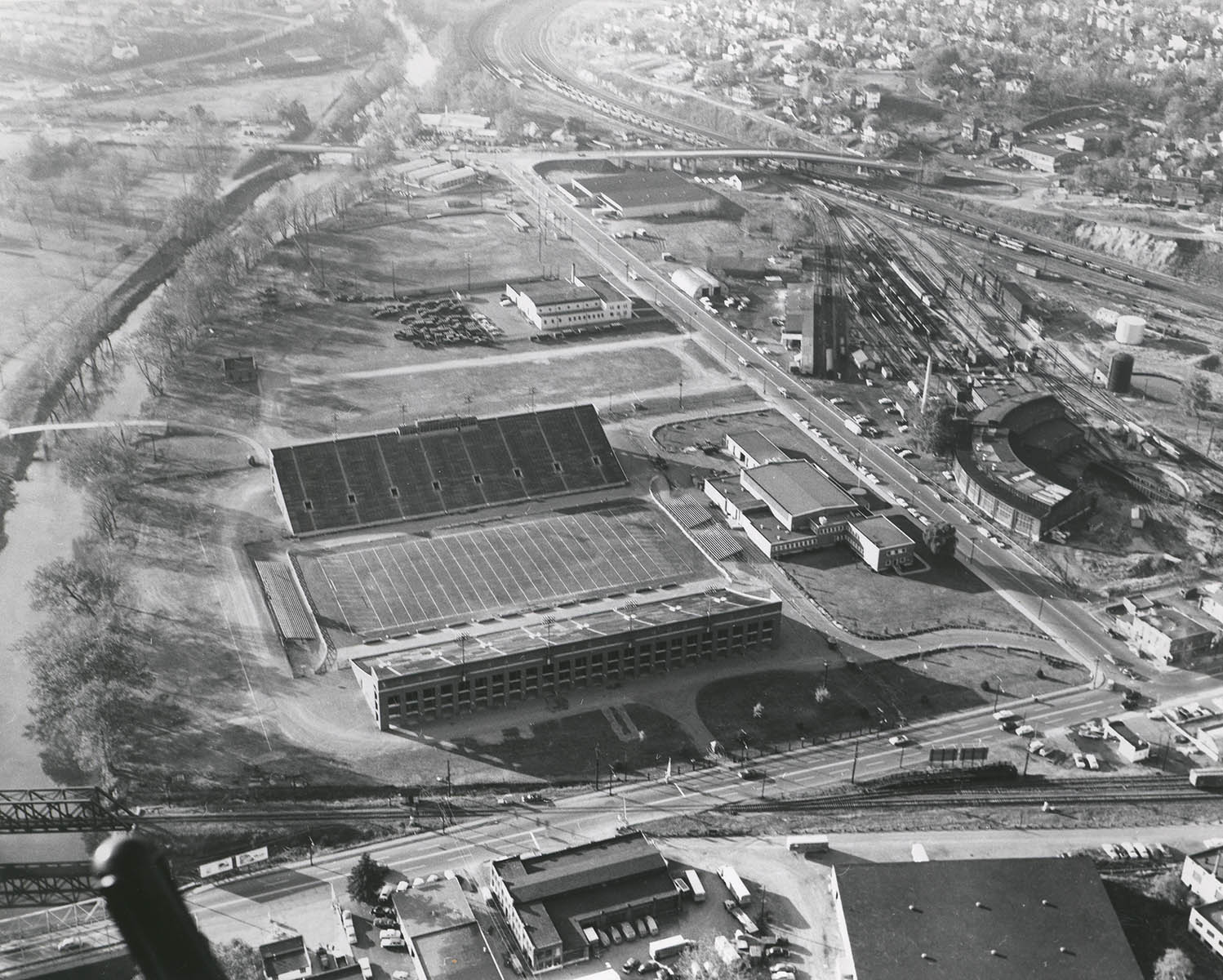
Written by Nelson Harris / Photo above: This is a 1959 aerial view of Victory Stadium along Reserve Avenue SW. Photo courtesy of Historical Society of Western Virginia
The Roanoke Chamber of Commerce wanted to help raise funds for sandlot football in Roanoke, so an exhibition game between the Pittsburgh Steelers and Baltimore Colts seemed the perfect means to do it. The National Football League was looking to expand its fan base, so preseason exhibition games were often held in midsize communities. The game was scheduled for August 12, 1961, at Victory Stadium.
The game coincided with the burgeoning efforts for civil rights in Roanoke, championed by the Roanoke branch NAACP led by Rev. R. R. Wilkinson and a young attorney Reuben Lawson, who had successfully litigated school desegregation cases in southwestern Virginia. With the NFL game, they saw an opportunity to do something long overdue—integrate the seating at Victory Stadium.
Built in 1942, Victory Stadium had been home to numerous high school and college football games, along with civic and religious events. For football games, Blacks had been forced to sit in seats that were between the 20-yard line and the end zone, while whites had everything in between. The NFL exhibition game presented an opportunity for Wilkinson and Lawson to elevate their civil rights campaign beyond just schools and transportation.
In March, Lawson announced the formation of a citizens’ protest group of the game. The Chamber of Commerce was at a loss to do anything. Having no control over the policies regarding the stadium, they deferred to Roanoke City Council. The council, upon the advice of the city attorney, asserted their hands were tied as Virginia law required segregated seating at public venues. An appeal to the Commonwealth’s Attorney C. E. Cuddy proved fruitless, as Cuddy argued there was little he could do unless there was an actual court case or a charge filed against someone. Lawson brought a suit in Roanoke City Circuit Court challenging the constitutionality of Virginia’s segregated seating law. Judge Fred Hoback dismissed the suit as no criminal warrants had been issued upon which to rule. Thus tickets continued to be sold on a segregated basis by the chamber.
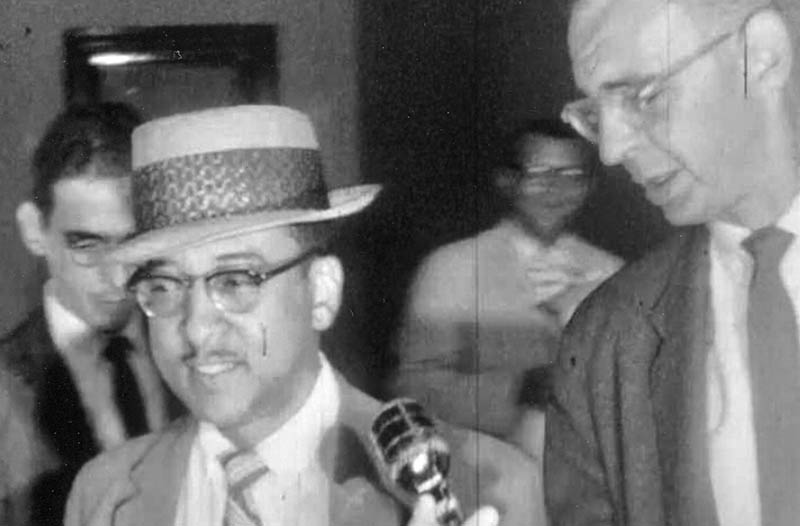
Lawson and Wilkinson had to pivot. With no legal remedy, the two decided to approach the NFL players, specifically the Black ones. The Roanoke Times editorial board had earlier opined the obvious, “If spectators are willing to see white and Negro players contesting on a playing field, they can hardly object with any degree of consistency to removing the color line in the spectators’ stands.” Two integrated teams playing in a segregated stadium was a complete contradiction.
Wilkinson sent telegrams to several Black players on the Steelers and Colts asking they boycott the game. One of the first to respond was Lenny Moore of the Colts, who reported that his teammates were in complete agreement with the boycott. As for the Steelers, Black players informed their coach they planned to sit out as well. Twenty players in all were refusing to play. Newspapers across the country began reporting on the boycott creating a public relations dilemma for the NFL. Players had complained of discrimination before, citing segregated hotels and restaurants in the South, but this was the first time they had joined an organized boycott of a game.
Pete Rozelle, the young commissioner of the NFL, was forced to give public comment. Helming his actions was Carroll Rosenbloom, owner of the Colts. Interestingly, Rosenbloom had made his fortune in Roanoke when he parlayed the struggling Blue Ridge Overalls Company into a rainmaker using government contracts. His rags to riches rise in Roanoke had allowed him to acquire the Colts in the early 1950s, so Roanoke was well-known to him. Rosenbloom was considered a “players’ owner.” That, coupled with his Jewish background, sensitized Rosenbloom to the issues of discrimination.
Days before the game, Rozelle issued a public statement that Roanoke had caused the NFL to give “attention to the unhealthy conditions existing in cities of this type.” Rosenbloom expanded upon Rozelle’s press release in stronger terms, “There will be no further tolerance of race segregation” relative to the NFL. Locally Cuddy quietly let it be known that there would be no prosecutions for violating segregated seating at the stadium. With these actions, the boycott was lifted and the game played.
An estimated 13,000 attended the Colts-Steelers game, which was won by the Steelers 24-20. As for the seating, nearly 300 Blacks sat in the whites-only section, while most others sat near the end zones. The increased police presence at the game proved unnecessary, as no incidents were reported and local police were instructed to make no arrests for violations of the state’s segregated seating law.
Years later in his autobiography Moore offered an insightful observation about the game. “I looked around the stands and it was obvious that black fans were still sitting in predetermined blocks of seats. I walked down the field, to the end zone, to meet some of the black kids…I had to reach through the chain-link fence in order to shake their hands. No image ever made me realize, with such force, just what blacks have been up against all through American history: we have always been on the outside looking in.”
Alex Long, a law professor at the University of Tennessee, wrote recently of the Victory Stadium moment in The Journal of the Historical Society of Western Virginia. “The preseason game between the Colts and Steelers remains an important event…in the history of sports and civil rights. Reuben Lawson, Rev. R. R. Wilkinson and twenty football players organized the first successful player boycott of a professional sporting event in the field of civil rights.” Long pointed out that the legacy of that game had ripple effects, crediting the game and its threatened boycott as helping pressure the Washington Redskins to integrate its roster and motivating two NBA players, Sam Jones and Tom Sanders of the Boston Celtics, to encourage other Black teammates to boycott an exhibition game in Lexington, Kentucky, just two months after the Victory Stadium game, in response to discrimination in that city.
As for seating at Victory Stadium, segregated seating was no longer enforced. The Colts-Steelers game had changed Roanoke and advocacy for civil rights in professional sports.
The story above first appeared in our May/June 2026 issue.