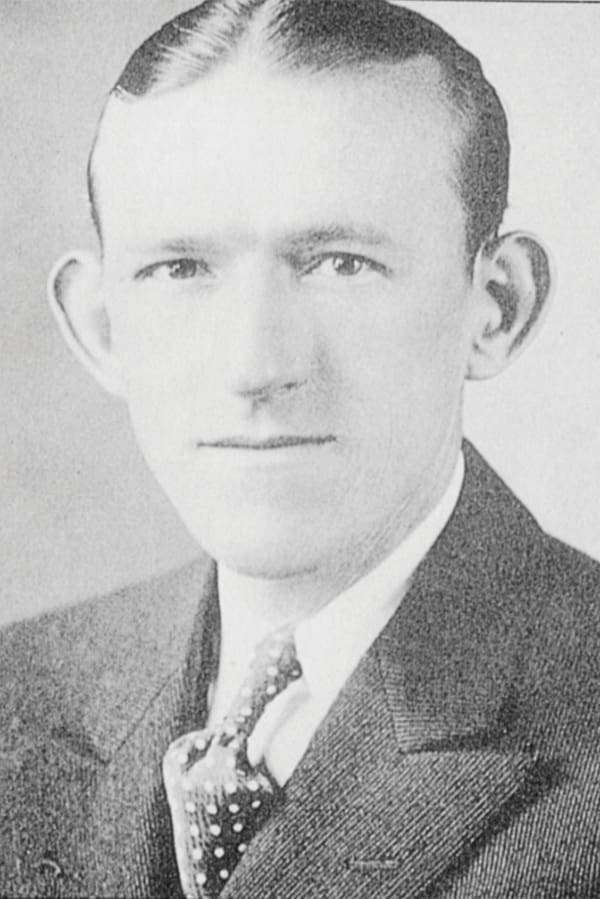
At only 9 years old, Julian Stanley Wise watched two men drown in the Roanoke River, a scene he never forgot.
Photos Courtesy of the Historical Society of Western Virginia
In 1909, a 9-year-old boy stood along the banks of the Roanoke River and watched a tragedy unfold. Two men were struggling in the water, as the canoe they were in had capsized. Adult onlookers heard the men screaming and stood helplessly as the men gasped for breath. As the river swirled around its victims, the men disappeared beneath the water and drowned. No one along the river knew how to swim or to provide aid. The scene of that event imbedded itself deep into the memory of the young boy such that 20 years later, Julian Stanley Wise decided to launch our nation’s first all-volunteer rescue squad.
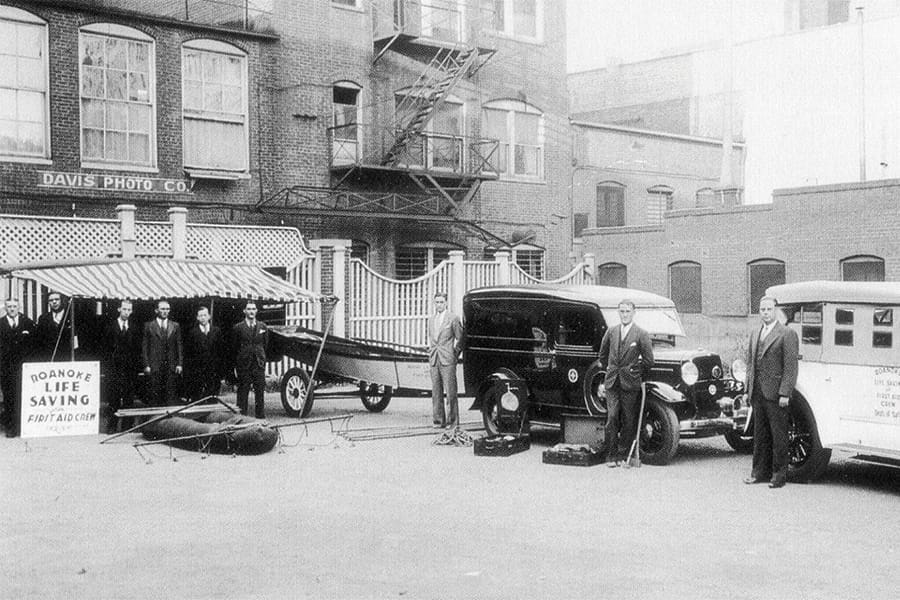
Wise worked at the Norfolk & Western Railway and recruited nine co-workers to form in May 1928 the Roanoke Life Saving and First Aid Crew. The crew’s initial mission was water safety and rescue. Using scant resources and equipment, such as a Pulmotor, Lungmotor, a boat and some grappling hooks, the crew responded to three calls during its first year.
Meeting one night a month at the Motive Power Building of the N&W, the crew studied and practiced first aid, using manuals from the American Red Cross and homemade equipment. In time, the crew earned instructor certificates and provided training to Roanoke police officers, firemen and ambulance drivers (the drivers and ambulances being from funeral homes in those days).
The crew staged a mock rescue using a 250-pound dummy for Roanoke officials that resulted in the city contributing $300 to the crew for supplies and communication support. Oakey’s Funeral Service donated an old Cadillac ambulance which the crew retrofitted for rescue operations. Prior to the donation of the ambulance, the men had used Wise’s roadster.
In 1930, the Roanoke Life Saving and First Aid Crew received a charter from the Red Cross and formal endorsement from the Roanoke Academy of Medicine. Calls had dramatically increased to 56 that year. Ever resourceful, Wise recruited nine more men to join as volunteers and persuaded Oakey’s Funeral Service to provide a dedicated space over its Kirk Avenue garage for the men to meet and store equipment. Oakey’s was home to the crew for the next few decades.
The mission of the crew expanded in the early 1930s to more than water rescues. The demand for emergency responses to other medical events necessitated the crew to train in the use of oxygen tents, a portable machine that could be used in homes and hospitals. In 1932, the squad purchased a Ford truck and was donated a Paige touring car to create a fleet of response vehicles. Rubber boats were replaced with metal boats hauled using a homemade trailer.
Over the course of the 1930s and ’40s, the Roanoke Life Saving and First Aid Crew’s reputation grew well beyond Roanoke, such that other communities in Virginia were asking Wise to help establish crews in their localities. By 1948, Wise and his squad had helped start 24 other rescue squads.
During this period, Roanoke notched another first in the rescue squad movement. In December 1941, two weeks after the attack on Pearl Harbor, Alexander Terrell formed the Hunton Life Saving and First Aid Crew, our nation’s first all-Black volunteer rescue squad. Terrell spearheaded the effort in the fear that should Roanoke suffer a military attack, there would be insufficient manpower to respond to the emergency, especially in the Black community during the days of segregated medical care. Wise worked with Terrell to provide training and support, and the men became close friends.
In addition to helping start local volunteer rescue squads, the Roanoke crew founded the Virginia Association of Rescue Squads in 1935, with its members serving in leadership of that organization for several years.
In the December 2, 1935, edition of the Roanoke Times, Wise provided an overview of the crew’s service during its formative years:
“In 1928, when we organized the Life Saving and First Aid Crew, we said if we saved one life we would be amply repaid. We have saved 95.”
Of the number cited, 18 had been resuscitated from carbon monoxide poisoning, 10 from gas, a dozen from heart attacks, nine from drowning and five from electrocution. By 1947, the Roanoke crew had logged 2,847 calls in its 19 years of operation and was credited with saving 453 lives.
By the late 1940s and ’50s, the Roanoke crew’s work expanded again to address the polio epidemic, as the crew transported iron lungs to homes and hospitals. In fact, the crew was responsible for getting the first iron lung into Virginia, when a case of infantile paralysis was diagnosed in 1940. The crew raised funds to purchase three iron lungs to have at its headquarters and procured an infant respirator which was credited by Roanoke doctors with saving the lives of numerous infants. In 1945, the crew received national attention when they were profiled in the February edition of Reader’s Digest.
In the decades that followed the Roanoke crew, along with other local volunteer rescue squads, spearheaded efforts for water safety classes, CPR training and better emergency response systems. Wise died in 1985, and four years later, the Roanoke squad merged with the Williamson Road Life Saving Crew to form what is today’s Roanoke Emergency Medical Services. The Hunton crew suspended operations in 1987.
While Roanoke’s first responders are now paid staff, the city’s place in the nation’s volunteer rescue squad history was cemented by Wise, driven by what he had witnessed as a boy at the Roanoke River.
Wise once said, “I vowed that never again would I watch a man die when he could have been saved if only those around him knew how.”
Editor’s Note: A few years ago, Nelson Harris applied for Virginia historic markers to be placed in Roanoke for the Roanoke and Hunton life saving crews. The one for the Roanoke crew is on Luck Avenue SW, across from the Oakey’s Funeral Service garage. The Hunton marker is on Wells Avenue NW, near the intersection with Gainsboro Road.
The story above is from our January/February 2026 issue. For more stories like it, Subscribe Today. Thank you!