The story below is from our July/August 2024 issue. For more stories like it, Subscribe Today. Thank you!
Photo above: Mrs. Woo (seated, front left) and the Woos’ five children (front row) with the Chinese Sunday School class at Trinity Methodist Church, Roanoke, in 1926.
Photos Courtesy of Nelson Harris
A century ago Roanoke’s first Chinese restaurant opened, but more remarkable was the man who opened it.
In the early summer of 1923, a small notice appeared over the Comet Theatre on Jefferson Street announcing a first in Roanoke — the opening of a Chinese restaurant.

The Celestial Chop Suey Palace Restaurant opened on August 1 and was described in the Roanoke Times the following day. “The Celestial Restaurant, which will specialize in such Chinese dishes as chop suey, chow mein, and yock-a-min, opened for business at noon yesterday at No. 307 South Jefferson Street. Twenty-two tables are in the establishment. The proprietor was engaged in business in Norfolk for seven years before coming here. The first customer was a large man who wore an Elks’ emblem in the lapel of his coat.”
The Celestial Palace was on the second floor, over the Comet, and the proprietor was Thomas Woo, who, along with his wife and children, lived on the third floor. Woo’s journey to Roanoke was both remarkable and daunting, as he navigated strong anti-immigrant sentiments aimed at the Chinese in the latter part of the 19th century.
Woo’s granddaughter Jeanie Woo, who lives in Gloucester County, emailed me much of his early history in the U.S. “Many Chinese were ‘paper sons,’ like my grandfather. In 1882, the Exclusion Laws were passed to prevent Chinese laborers from coming to America. However, if a Chinese citizen of the U.S. had children in China, he could bring him or her to the U.S. So the Chinese would claim they had more children than they had and they would sell the extra papers to someone in China who wanted to come. So he was called a paper son and had to memorize all the personal info about the village, family, etc., of the paper father, so when he was interrogated at Angel Island in San Francisco, he would be approved to enter the U.S. My grandfather’s paper name was Woo Yuk Poy (surname first), but his real Chinese name was Tom Hung Yee. So he called himself Tom Yee Woo in this country by combining both surnames.”

Immigrating to America in 1909 at the age of 16, Woo first went to Los Angeles where he worked at the Produce Market and attended classes at a Brethren Mission. His teacher was a young German-Welsh woman, Caroline Deardorff. The two fell in love and married in 1917.
Soon after their marriage, the couple moved to Norfolk, Virginia, where Woo worked as a clerk at the Southern Inn to learn the restaurant business. Jeanie Woo writes, “They moved to Norfolk, living there for a number of years before someone must have told them about wonderful Roanoke. He must have had a Chinese contact in Roanoke. But they had saved their money and bars of gold to open the Celestial Chop Suey Palace on Jefferson Street. The sign was quite auspicious, so I imagine it was a fine restaurant.”
Roanoke had a burgeoning Chinese community at the time the Woos arrived. In 1892, due to the Exclusion Laws, Roanoke was made to register all Chinese immigrants. A notice requiring such was posted in Chinese in the post office, and the official reported 14 Chinese residents in the city. By the time the Woos came to Roanoke a quarter-century later, there were Chinese laundries, even a reported “Chinatown” as early as 1910, but no Chinese restaurant.
When the Celestial Palace opened in August 1923 it quickly became a success. Subsequent ads indicated a brisk business. Within three weeks Woo was offering a “businessman’s lunch” between 11:30 and 2:30 with the notice given that “we now have more help and prompt service is guaranteed.” For Thanksgiving that year, the Celestial offered a Thanksgiving dinner for $1.25 between the hours of 11 a.m. and 9 p.m. Woo’s business was a success.

In the spring of 1926, Woo advertised that his restaurant had been newly painted and decorated, offered lunches from 40 to 55 cents and dinners priced between 50 and 90 cents. A la carte service was available at all hours, and American dishes had been added to the menu. The Celestial had become quite popular, allowing the Woos to move from the third floor above the restaurant to a home at 808 Fairfax Ave NW. Woo had also purchased an automobile, an indication of his increasing prosperity.
But as the Celestial grew, Woo was suffering from failing health. He had contracted tuberculosis, which was diagnosed shortly after he opened the restaurant. He had been admitted to the Catawba Sanatorium in September 1924 where he spent four months. But his TB did not abate. Finally, Woo was forced sell his restaurant to Sheen and Jimmy Leung in 1926. In late November of that year, Woo placed a notice in the local newspaper: “All persons in Roanoke to whom Thomas Woo, manager of the Celestial Restaurant, owes money are hereby notified to call or collect from him within seven days. After this time the money cannot be collected.” The Woos, along with their children, left Roanoke for Los Angeles. A December 1926 ad for the Celestial read “under new management.”
Thomas Woo succumbed to tuberculosis in Los Angeles in May 1927. His remains were sent back to China some years later where they were interred in his native village. Woo’s wife, Caroline, who had taught a Chinese Sunday School class at Trinity Methodist Episcopal Church when the family lived in Roanoke, returned to Norfolk near her sister and brother-in-law. She died in 1936.

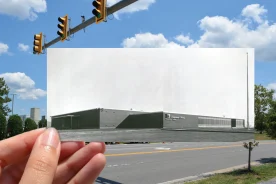
Jeanie Woo cherishes the few photographs she has of her grandfather, and the only known image of the restaurant is a photo of the 300 block of South Jefferson Street taken in the mid-1920s. As one looks at the image, the sign for Woo’s establishment is visible. The word “Celestial” runs horizontal from the third-floor façade of No. 307, and “Chop Suey” descends vertically beneath it. Its prominence invited Roanokers to dine in what had never existed before in the Magic City, a Chinese restaurant, and to patronize an entrepreneurial immigrant making his way in America.
The story above is from our July/August 2024 issue. For more stories like it, Subscribe Today. Thank you!