The story below is from our March/April 2022 issue. For more stories like it, Subscribe Today. Thank you!
In the 1940s the Gainsboro librarian was directed to rid the library of materials deemed subversive by white politicians. They thought she had, but they failed to look in the basement!
Virginia Lee was destined to become a librarian. As a student at Lucy Addison High School in the early 1920s, she gave a talk at the Gainsboro Branch Library on the importance of libraries in the community. At that time, the Gainsboro Library was in a room of the Hunton YMCA on Gainsboro Road. Lee graduated from Hampton Institute and became a college librarian in Memphis, TN. With her parents ill, she returned to Roanoke, taught at Gilmer School, and in 1928 became the librarian at Gainsboro, a position she would hold for over 43 years.
At Gainsboro, Lee set about organizing exhibits, lectures, reading clubs and conferences, all in an effort to promote and educate about Black history and current events. Often using funds she raised privately, Lee secured library subscriptions to leading Black newspapers and periodicals, purchased books and amassed a collection of news clippings, programs and other ephemera that documented Black life and achievement. Her collection became the largest such African American resource in Southwestern Virginia.
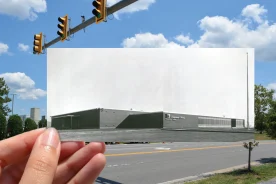
The library quickly outgrew its space such that in the late 1930s, Lee called upon Roanoke’s Black clergy, lawyers and other professionals to lobby Roanoke’s leaders for a new Black library, especially as there was planning for a new, whites-only main library in Elmwood Park. Through the dogged determination of herself and others, the new Gainsboro Branch Library opened at its present site in 1942. Lee continued as she always had with exhibits, conferences, speakers and what had become the Jessie Faucet Reading Club, whose active membership exceeded one hundred. The reading club, organized by Lee in 1929, brought in well-known Black writers, intellectuals and educators for various presentations and speeches on matters of Black interest.
Lee’s energy and activism did not go unnoticed by Roanoke’s white leadership, however. By the 1940s, as was the case elsewhere in the American South, a local civil rights movement was being birthed. In Roanoke, a few women, usually domestic workers, refused to move to the back of city buses; Black civic leaders demanded the hiring of Black policemen; and efforts to organize voter drives to support Black candidates in elections were underway.
Lee’s passion had always been young people. Lifelong library patron George Heller recalled some years after Lee’s retirement, “She made us read big folk books, and she saw to it that all Black children in the Gainsboro Library could read and read with understanding.” But what were the children and youth understanding in the library during the 1940s? Which authors were they reading? What Black national newspapers were they being exposed to? And what was the reading club promoting? Some in the white establishment became suspicious.
Perhaps the straw that broke the proverbial camel’s back came when A.E. Lichtman, a progressive white owner of Black theatres, donated materials to the Gainsboro Library. In 1936, Lichtman had made The Virginia Theatre, located in Gainsboro, part of his chain and appointed a few years later Emmett Nabors as manager.
Dr. Laura Helton of the University of Delaware theorized in an email to me, “I speculate about what might have tipped off local officials. It could have been the public donation of books to the Gainsboro branch by A. E. Lichtman…who was a supporter of the NAACP. Lichtman’s donation was presented to Lee by Emmett P. Nabors, Jr., the manager of The Virginia Theatre, who was active in the Roanoke NAACP chapter and had several years earlier filed suit (with several other prominent Black Roanoke residents) against the Roanoke police. When that donation became known, it may have angered local officials.”
Lichtman made his donation to the library in the summer of 1942. A photograph of Nabors presenting the donation of some 20 or more volumes to Lee appeared in Norfolk’s New Journal and Guide, a leading Black newspaper in the state. The caption read, “These books will take up a section of the library to be called ‘The Lichtman Shelf on Negro History.’”
In a 1970 interview with the Roanoke Times, Lee recalled that period when some members of city council asked that certain books be removed, so she took them to the basement in order to protect her volumes on Black history. “It was an effort I absolutely refused to deviate from. I was confident that eventually there would be a re-evaluation and reassessment of the material, and I have lived to see that time.”
While not contained in any official documentation, such as library board or city council minutes, Lee recalled the directive again during a 1982 interview where she said her employment was even threatened. Lee complied, but in a manner in which city officials were not aware. By moving what apparently was deemed objectionable – even subversive – materials from the official library collection on the main level to the library’s basement, her patrons knew they could still request of Lee a book or journal not found in the reading room or card catalogue. She would slip down to her hidden subterranean library and then ask that it be returned at the borrower’s convenience.
Lee’s secret library became the focus of remarkable research by Helton that was presented in her online 2020 lecture “Access Restrictions and Secret Libraries: Virginia Lee and the Policing of Black Books.” Helton contextualized Lee’s efforts locally and nationally as Lee and her peers thwarted efforts by some white officials to constrain Black libraries and librarians during the burgeoning days of civil rights. The fact that Lee’s collection and activities had made the Gainsboro Library a center of civic and cultural life for Roanoke’s Black community and by extension a concern for certain whites is a tribute to her convictions and vision.
Eventually, materials in the basement of the Gainsboro Library made their way back upstairs to the library’s main shelves and reading room. Lee retired as the Gainsboro librarian in 1971 and was honored by having the collection named for her in 1982. At the dedication, Lee said, “One of my main concerns was to build and assemble a collection of ‘Black History’ books during my tenure…I knew the day would come when there would be widespread interest in…the heritage of other Blacks and their contributions to America.”
Virginia Young Lee died in 1992. Today, her “secret” library and archives that she dutifully protected and preserved in the basement in the 1940s and continued developing during her tenure is the treasured centerpiece of the Gainsboro Branch Library collection.
The story above is from our March/April 2022. For more stories, subscribe today or view our FREE digital edition. Thank you for supporting local journalism!