Heads turned in August 1918 when Henry Ford, Thomas Edison, and Harvey Firestone arrived unexpectedly for lunch at Hotel Roanoke.
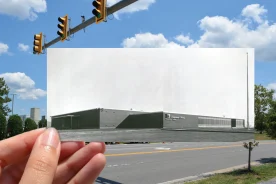
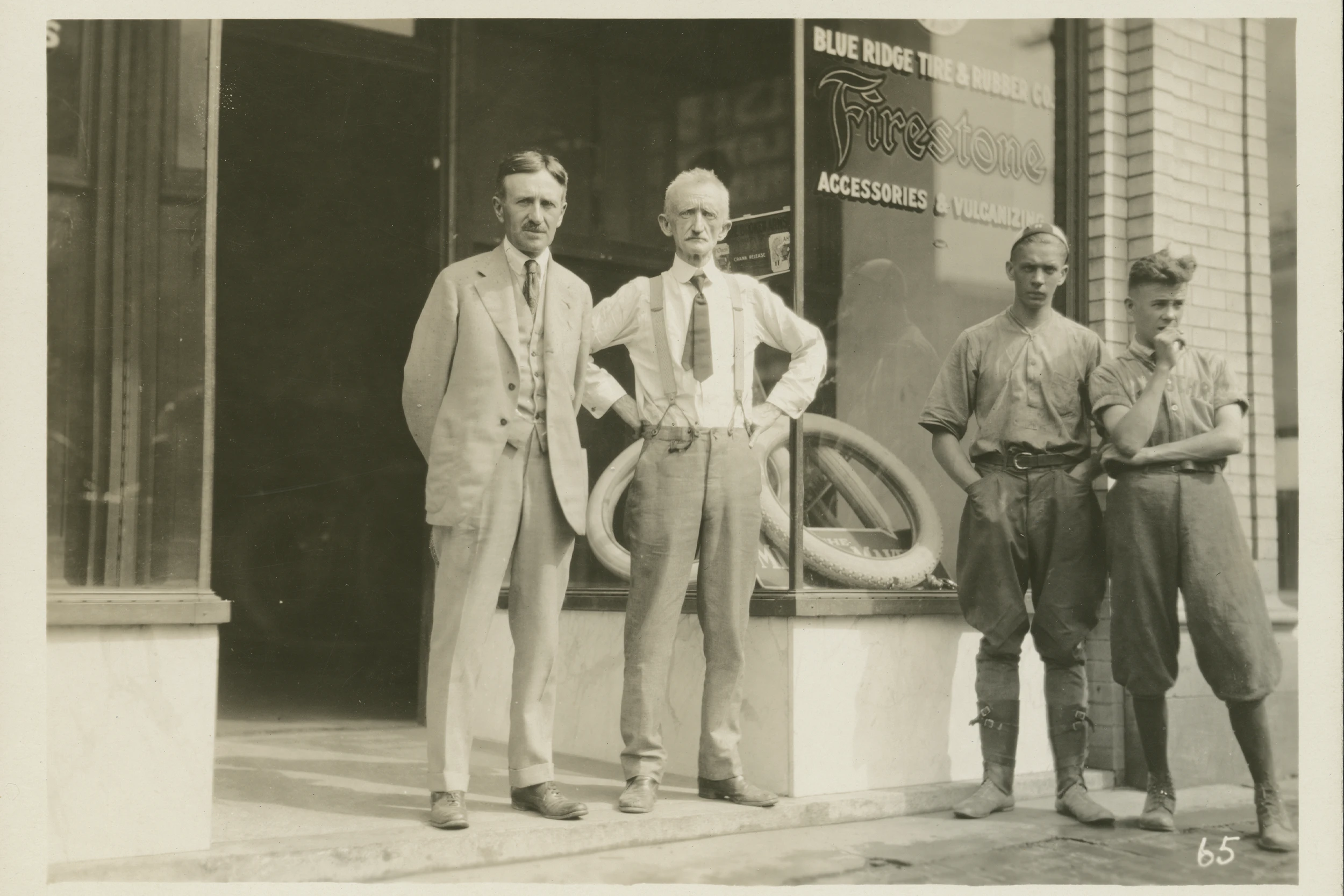
Written by Nelson Harris. Harvey Firestone, left, visiting Blue Ridge Tire and Rubber Company in Roanoke in August 1918.
They started in Pittsburgh in the summer of 1918 and moved south with no real itinerary except to eventually reach Asheville, North Carolina. The four vagabonds planned to take rural roads, avoid hotels, and camp roadside.
They wanted to see the mountains and relax. They pitched tents, cooked outdoors, and reminisced. They stopped at abandoned grist mills along creeks and rivers and rested in pastures. They cared little for encounters with others, though they were friendly if their presence was noticed. They were older and found pleasure in the simple companionship enjoyed by close friends. “Vagabond” was not meant as a derogatory term by any means, for that was what they called themselves.
As they traveled through the Blue Ridge Mountains, they passed Bluefield, Elkins, Hot Springs, White Sulphur Springs, and Narrows before arriving in Asheville. An occasional photograph was taken, usually by residents of those communities who were curious about the vagabonds’ presence. As they began their return to Pittsburgh, the men journeyed to Winston-Salem and then north through Martinsville and Rocky Mount.
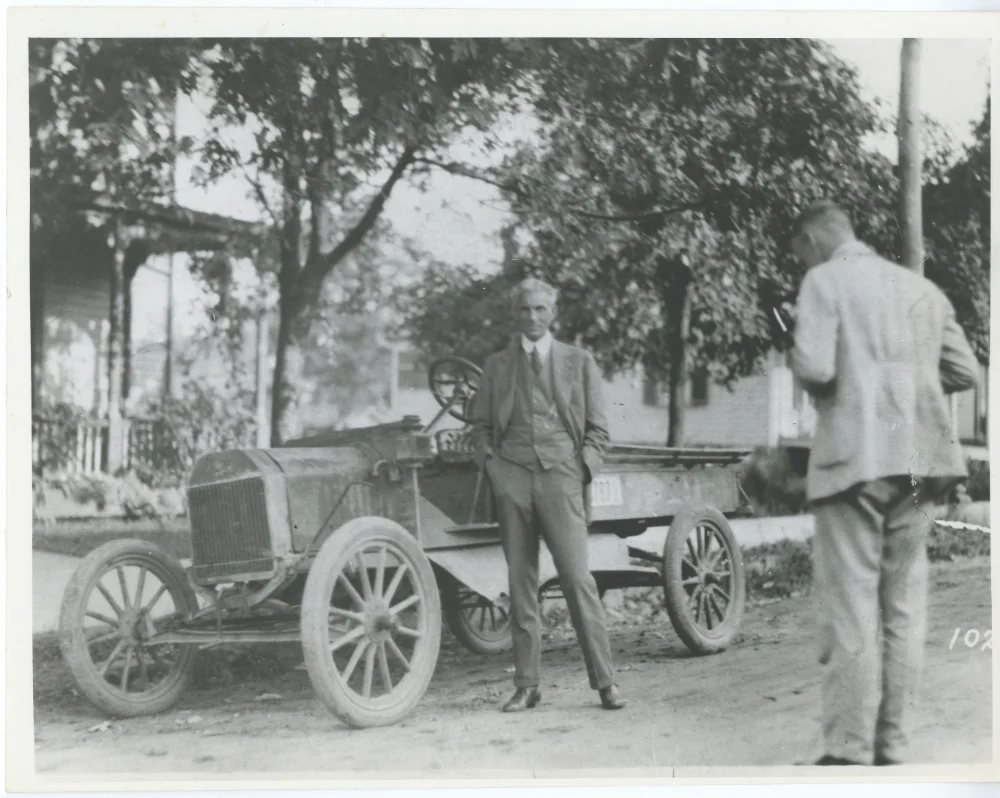
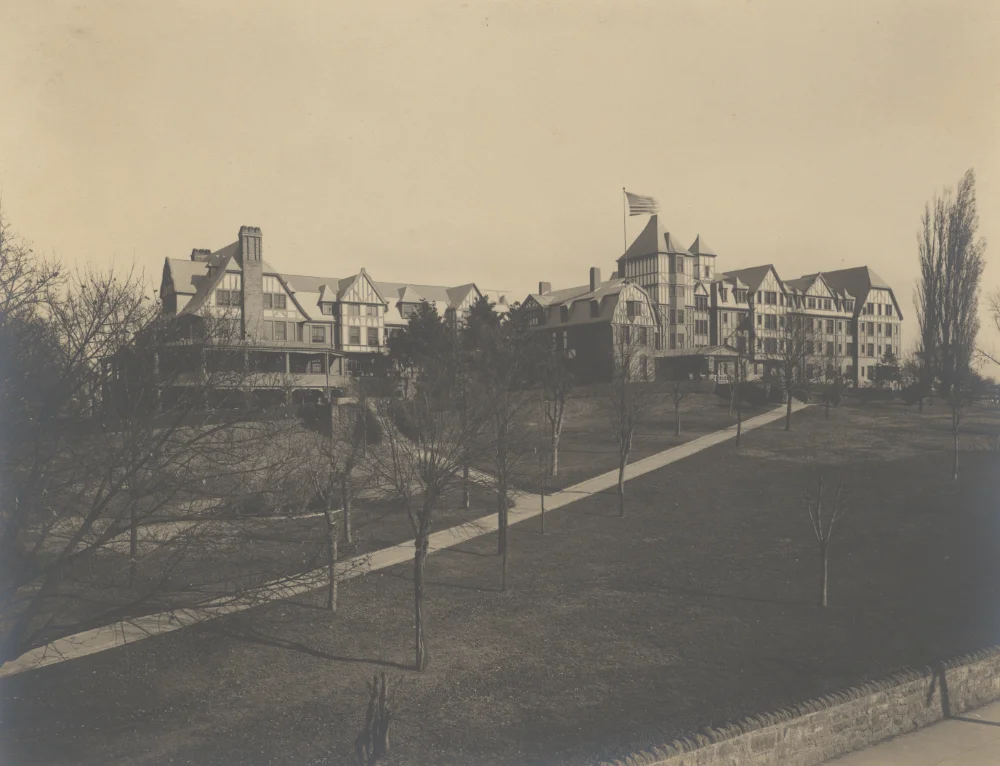
At noon on August 30, the vagabonds slipped quietly into Roanoke. Mrs. Fred Foster was managing the Hotel Roanoke, having taken over the role from her husband, who had died three years earlier, and Ed Brown was the head waiter when the vagabonds walked into the hotel for lunch. They did not look like vagabonds, as each was attired in suit and tie. They were unannounced, as their impromptu visit to the hotel was due to needing gasoline for their cars. They had stopped at the corner of Jefferson Street and Shenandoah Avenue in front of the Red Cross canteen station and sent for fuel. The hotel, being close, was convenient.
Foster and Brown, like others at the hotel that afternoon, were struck as they watched the four vagabonds— Henry Ford, Thomas Edison, tire magnate Harvey Firestone, and naturalist John Burroughs—walk through the lobby doors.
They were served lunch and shown hospitality. Ford was fashionably thin in his three-piece suit, graying hair parted neatly to the side. Edison sported a bit of a pouch and a bow tie, with hair looking anything but combed. Burroughs was the eldest at eighty, and his bushy white beard hung below the knot of his necktie, while Firestone wore travel clothes.
As the men dined, Roanokers could not help but notice the vagabonds’ parked caravan of two new Fords and a large Packard. There were also two specially equipped Model T trucks that carried each man’s 10-foot-square tent, a 20-foot-square dining tent, a nine-foot dining table with “lazy Susan,” water tanks, stoves, an Edison-arranged refrigeration system for provisions, and a small, portable electric contraption that lighted Edison’s lamps strung each evening at their campsite. The caravan also included chauffeurs and cooks. By the time the men had consumed lunch and walked down the front steps of the Hotel Roanoke, a small crowd had formed as word circulated after the vagabonds’ arrival.
As they awaited the supply of gasoline, the crowd became more numerous and was soon being engaged by the gregarious Ford, described as “all energy,” who shared stories, laughs, and explained the group’s travel. One citizen, Robert Wilson, asked Ford about bringing an automobile plant to Roanoke. Ford, whose business interests had broadened beyond automobiles, replied, “Oh! You have a fine enough country down here for anything, but just now I am talking tractors and water power.” The industrialist commented that the resource of water and its commercial potential was what had caught his attention driving through southwestern Virginia.
Ford offered impressions about road conditions, especially between Martinsville and Roanoke, and punctuated all of his remarks with good humor. Ford even joked about his U.S. Senate candidacy in Michigan. He had been rejected by the Republicans and was running as a Democrat—an election he would narrowly lose.
As Ford regaled the crowd, Edison quietly studied the afternoon editions of the Roanoke newspapers, keenly interested in news of the war. Burroughs assisted with the refueling, and Firestone visited the Blue Ridge Tire and Rubber Company on South Jefferson Street.
By four o’ clock, the caravan was ready to travel. Before climbing into the lead Packard, Ford addressed the crowd: “You have a wonderful country hereabouts and a wonderful people living in it.”
The vagabonds headed north through the Shenandoah Valley, stopping briefly at Natural Bridge and overnight at the Castle Inn between Lexington and Staunton. They made their way to Winchester and then into Maryland. In Maryland, a state forest warden, Link Sines, was invited to guide the entourage through one of the state parks. As he did, the caravan stopped at a small hardware store to purchase supplies. Sines thought it appropriate to introduce the group to the store’s proprietor, a Mr. Naylor. “I’d like to introduce you to Thomas Edison; he invented that light bulb in your ceiling. This is Henry Ford; he manufactured that car parked outside your store. And this is Mr. Firestone; he made the tires that are on your car.”
The skeptical Naylor looked at Sines and interrupted, “And I suppose you’re going to tell me that this man [Burroughs] with the white beard is Santa Claus!”
Fortunately, the vagabonds required no introductions in Roanoke.
The vagabonds continued their camping trips for many years, though Burroughs died in 1921. In the early 1920s, they took with them on separate occasions Presidents Harding and Coolidge. For a decade between 1914 and 1924, the vagabonds camped and traveled along the East Coast, demonstrating both the versatility of the automobile and the pleasure of camping. These excursions, which eventually became well publicized, were credited with launching family-oriented, recreational camping in America.
The story above first appeared in our September/October 2026 issue.