Four women took control of their health and happiness by getting a gastric sleeve or bypass surgery. These surgeries kickstarted lifestyle adjustments that have enabled each woman to live her best life.
Written by Stacey Manganelli
Opting for Surgery
Elizabeth Kiefer, Kristen Guthrie, Katie Kelley, and Adriana Sorensen struggled with their weight for multiple reasons: pregnancies that came close together, food addiction, or an inability to incorporate exercise into daily life.
After trying tons of weight loss programs and pharmaceutical-strength pills and shots, they pursued weight loss surgery at between 300 and 350 pounds. They were nervous for surgery, but also excited and hopeful that it would be the thing that finally worked.

Courtesy of Elizabeth Kiefer
The Myth of the Quick Fix
Weight loss surgery requires profound lifestyle changes. Even when surgery goes optimally, it takes a physical and psychological toll on surgical patients. Recovery and adapting to the new body present myriad challenges.
Elizabeth Kiefer has consequently felt frustrated over the years that people view weight loss surgery as an “easy way out.” After surgery, she struggled with transitioning from eating a regular-sized meal to one the size of an egg. She also had to learn how to incorporate exercise into her daily life.
Katie Kelley got so sick in post-op that she spent three additional nights in the hospital. Even once she was discharged and finally went home, she couldn’t pick her three small children up or do daily activities, and she didn’t have a support network.
Both she and Sorensen also struggled with feeling overweight even when they weren’t anymore, a condition known as dysmorphia.
Guthrie drank mostly protein shakes and water for six weeks before and after her surgery and had to train herself to stop eating before she felt full. She also experienced temporary but intense changes in hormones caused by rapid weight loss.
No one had it easy. However, after surviving a period of disillusionment, and in Kelley’s case even “immediate regret,” they have made it through to the other side.
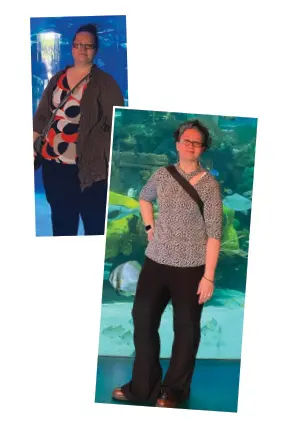
Courtesy of Adriana Sorenson
Health and Career Benefits
Prior to surgery, Kiefer was unable to get herself up off the floor independently. After losing 200 pounds, she started incorporating more movement into her daily routine than she ever thought she’d be capable of.
To get into shape, she started Zumba and was immediately hooked, transported by the music and movement. After honing her skills for a few years, she got certified to teach. She eventually took over teaching the very same class in which she started as a student. She said, “I never thought I’d be able to enjoy exercising, let alone become a fitness instructor. Now I can’t go a day without working out!”
Kelley said that her health would be worse if not for the surgery. It has healed her heart condition, prediabetes, and Polyendocrine Metabolic Ovarian Syndrome.
For Sorensen, the changes after surgery felt like a “complete 180.” She learned how important protein is in losing weight, started looking more closely at what is actually in food, and cut out processed foods over time.
She will likely need a knee replacement at some point, but losing 150 pounds has greatly reduced her knee strain. Her doctor believes she’ll be able to push the surgery off for several more years as a result.
Guthrie once “despised” her body, but after her weight loss, she wore a bikini for the first time since she was a teenager and had boudoir pictures taken.
Her newfound confidence even helped her launch a new career. She said, “I landed an amazing job in medical device sales that I never would have had the confidence to even apply for before surgery.”

Courtesy of Katie Kelley / Courtesy of Kristen Guthrie
Helping Others
These women have turned their transformations into a tool that supports not just them, but also others.
Dozens of people escape the daily grind for an hour each week when taking Kiefer’s Zumba classes. In a cortisol-fueled world, gym patrons forget their troubles and become immersed in the same music and movement that made Kiefer fall in love with this type of dance. They described Kiefer’s classes as “pure fun,” and Kiefer as “pouring her heart and soul” into her role as an instructor.
Kelley and Sorensen are grateful that they’re able to more fully participate in their kids’ lives since losing weight. Kelley coaches her kids’ sports and provides better food options for them since she started eating healthier herself.
Sorensen has a nonverbal 15-year-old autistic son. Because he will never live independently, Sorensen plans to be his caretaker for many more years. She needed to be healthier to care for him, and now she is.
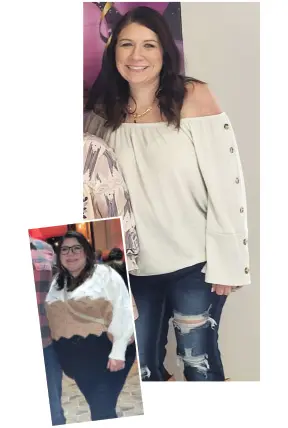
Courtesy of Katie Kelley / Courtesy of Kristen Guthrie
Sorensen’s daughter is also benefitting from her mom’s increased fitness level. She and Sorensen bonded by running a 4K together two years after her surgery—something Sorensen never thought would be possible.
In her job in medical device sales, Guthrie experiences the satisfaction of educating surgeons, doctors and hospital staff on new medical technologies. Thanks to her work, these technologies can get into the hands of those who need them and will benefit from them.
Despite encountering different health challenges as a result of the surgery, the gastric bypass and gastric sleeve have opened up life possibilities far beyond what they once hoped for.
Knowing how hard recovery was and how many challenges they would face, would they do it again?
“Absolutely,” they agreed.
The story above first appeared in our July/August 2026 issue.