The story below is from our September/October 2021 issue. For more stories like it, Subscribe Today. Thank you!
John was considered strange and avoided by most when he lived in Roanoke, but he captured the international spotlight in 1994.
He whistled everywhere he went, but not out of happiness. The repetitive notes were part of the audio hallucinations that had plagued John for years.
It was 1967, and John’s mental illness had taken its toll. His schizophrenia and the myriad of accompanying symptoms had drained his wife, emptied his bank account, and ended his promising career. Divorced and unemployed, John moved to Roanoke that summer to live with his widowed mother Virginia. He was 39.
Virginia had moved to Roanoke in the 1950s when her husband, an electrical engineer, was transferred from Bluefield, West Virginia, by Appalachian Power Company. Educated, graceful, and religious, Virginia had been a school teacher. She and her husband moved to a modest apartment at 1821 Grandin Road, next door to Raleigh Court Presbyterian Church. In 1956, Virginia’s husband became ill, battling fatigue and nausea throughout that summer. In September, her husband suffered a massive heart attack and died. Fortunately, Virginia’s daughter Martha and her husband lived nearby in an apartment on Westover Avenue. Meanwhile, her son John had earned a Ph.D. from Princeton University, married a physicist and was by all appearances enjoying a career in academia.
In the late ‘50s, John and his wife Alicia visited Virginia regularly on holidays, with Martha occasionally taking her sister-in-law to shop downtown. While John behaved oddly, all seemed to tolerate his eccentricities. In time, however, John began having psychotic breaks, hallucinations and paranoia that betrayed a deep-seated illness that ravaged him and those closest to him.
Unable to cope, Alicia filed for divorce the day after Christmas 1962, which was granted a few months later. Alicia had committed her husband to a mental institution a few years prior, for which he was resentful. A second committal to the Trenton State Hospital in New Jersey was made by Virginia. As with the first stay, John was kept for a few months and then released. Colleagues and friends of John at Princeton sought to help, but all efforts ultimately were fruitless. Thus, John arrived at his mother’s apartment alone and ill in late June of 1967.
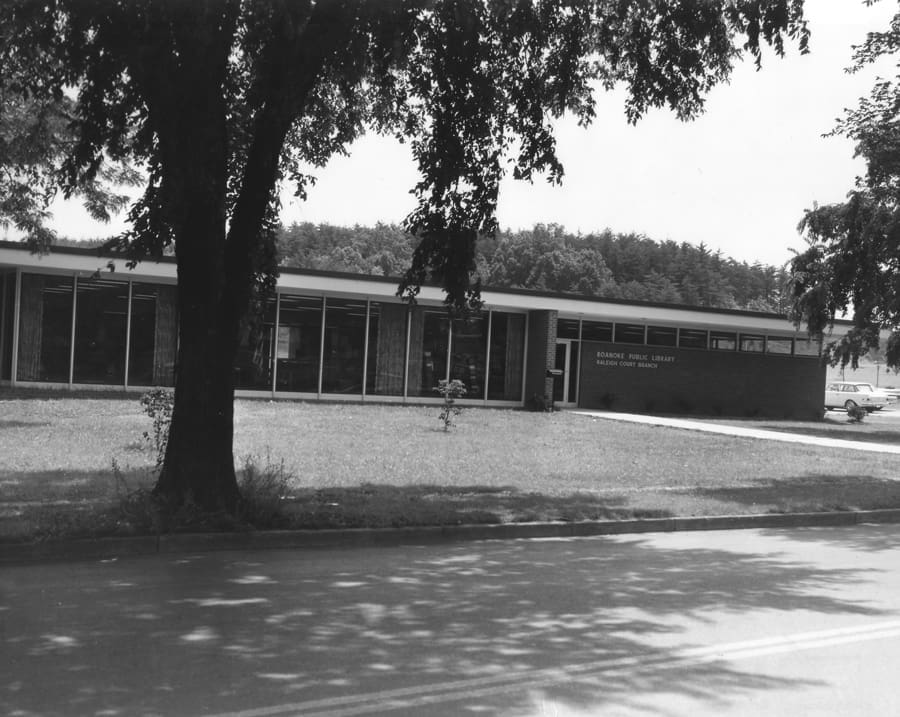
Almost daily John frequented the Raleigh Court Branch Library and the businesses in the Grandin Village, whistling as he went. But most days he paced back and forth in his mother’s apartment whistling. He assumed various identities – a refugee, a Japanese shogun, Biblical characters and even animals. Layered on this were apocalyptic visions and paranoid delusions – all driven by schizophrenia.
Those who lived in the neighborhood soon became aware of John, but he remained a stranger. The whistling, the hollowed face and gaunt eyes caused persons to pause and cross the street. Parents warned their children to keep their distance. His appearance made John look much older than he was. Virginia never talked of her son’s illness with her friends in Roanoke. It was a purely private matter.
Those that lived in the small apartment complex found John a nuisance. His plodding around the grounds made them anxious. Once when a fire started in an incinerator, the neighbors quickly suspected John was an arsonist. The landlord threatened eviction.
Virginia shouldered the burden and bore the brunt of John’s erratic behaviors. Unwilling to let others in on the family’s secret, she and Martha provided what equilibrium they could. In November 1969 Virginia died. John’s paranoia refused to accept the death as anything other than suspicious, and his relationship with Martha became even more strained.
Unable to live on his own, John moved in with Martha, her husband and their two young children in their new home. She could not cope with her brother’s illness. John paced her house whistling and muttering delusional theories. Shortly after Christmas 1969, Martha sought the assistance of well-known Roanoke attorney Leonard Muse and had her brother committed to the mental institution at Staunton. He stayed two months and was released on his own recognizance. John, angry at his sister for the committal, temporarily severed relations with her and put Roanoke behind him.
Over time, John’s paranoid schizophrenia was managed with success through a variety of drugs and other treatments. He gradually re-entered academia, teaching, publishing and lecturing. An event in 1994, however, caught the attention of many, including New York Times journalist Sylvia Nassar. Nassar asked her editors for a leave of absence to write about John’s erratic but amazing life story.
The result was Nasar’s biography “A Beautiful Mind” published in 1999 that was followed by the Academy Award-winning film of the same title in 2001. For her research, Nassar traveled to Roanoke in 1995 and interviewed Martha about her brother and the Roanoke years that marked one of the lowest ebbs in John’s battle with mental illness, a period Nassar titled “A Man All Alone in a Strange World.”
So what was the event in 1994? That year John Forbes Nash, Jr. – the gaunt-faced whistler on Grandin Road – won the Nobel Prize in economics.
The story above is from our September/October 2021. For more stories, subscribe today or view our FREE digital edition. Thank you for supporting local journalism!