The story below is from our May/June 2025 issue. For more stories like it, Subscribe Today. Thank you!
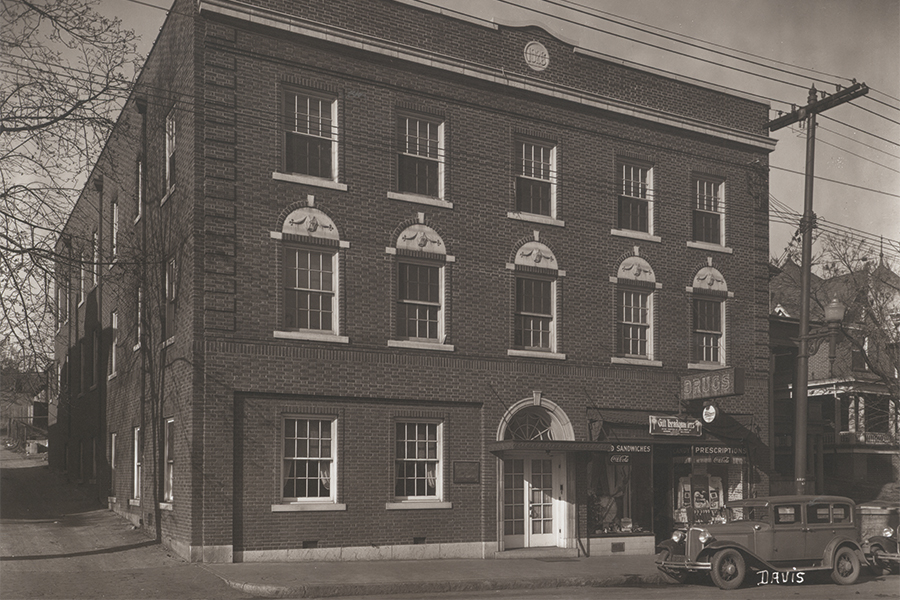
Photo above: The Gill Memorial Ear, Eye, Nose and Throat Hospital, shown here, opened in 1928. Ewald Pharmacy was near the front entrance. Courtesy of The Virginia Room, Roanoke Public Libraries.

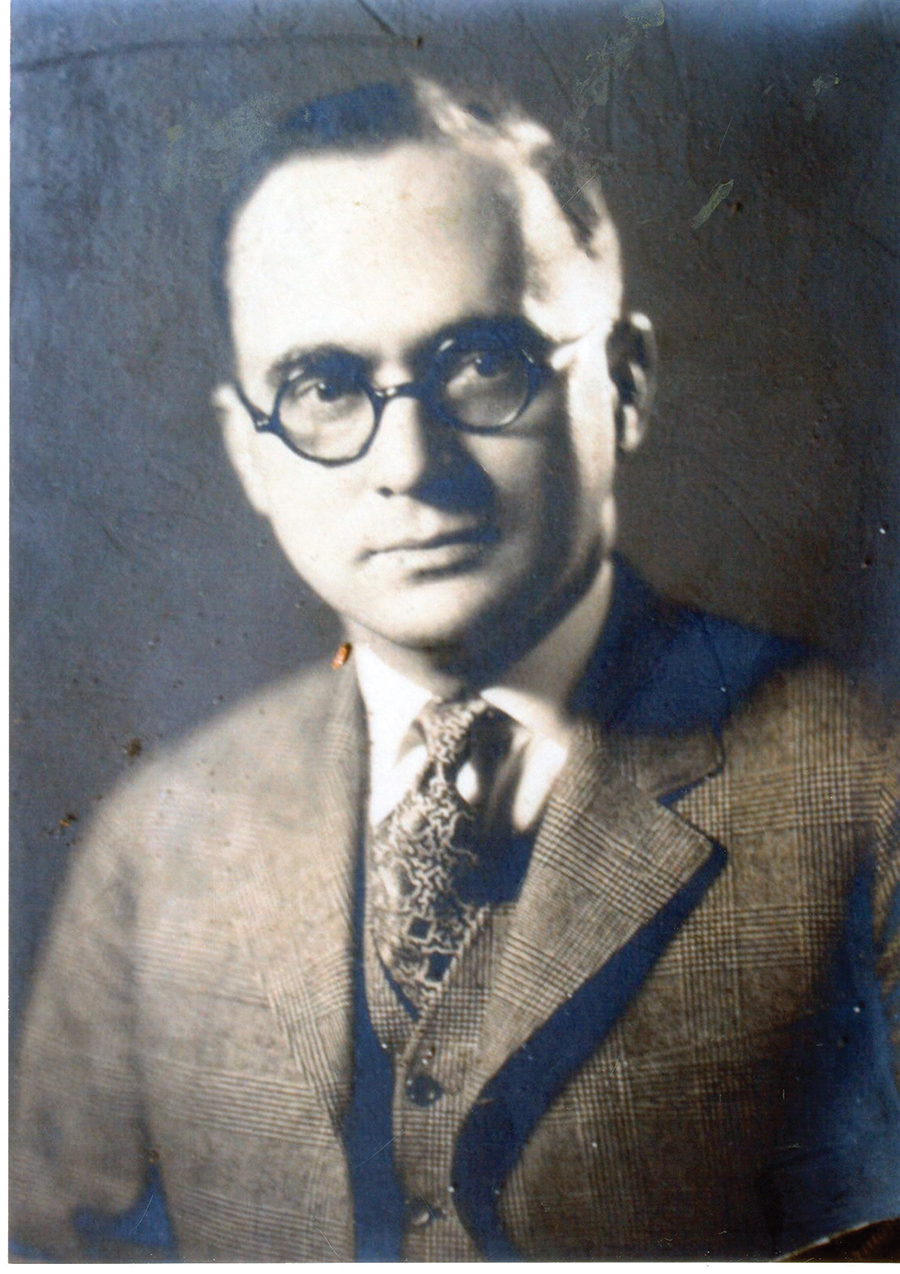
Dr. E. G. Gill was a tireless humanitarian who put Roanoke at the epicenter of sight preservation.
When the Virginia State Lions Club decided to hold its annual convention in Roanoke in May of 1939, Dr. Elbyrne Gill swung into action. Gill was Roanoke’s preeminent physician on matters of sight, having established the Gill Memorial Ear, Eye, Nose and Throat Hospital on South Jefferson Street in 1926.
As honorary chairman of the convention, Gill sought to bring the world’s most celebrated advocate for the blind to Roanoke. In February, Gill penned a letter to Helen Keller inviting her to speak at the convention. “If you come, the public will be invited to hear you, and we can assure you of a very large and enthusiastic audience. Your presence will add much to the work we are doing for the unfortunate people of our State, and as a Director of Lions International and chairman of the Committee on Arrangements, I wish to extend to you a most cordial invitation.”
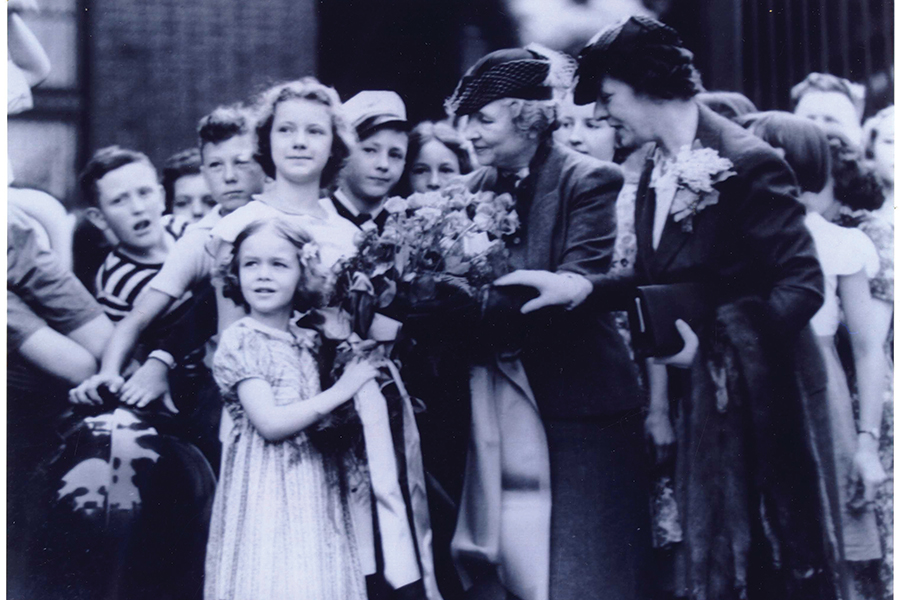
Keller arrived in Roanoke by train on the morning of May 26, where she was greeted by Gill and a throng of Roanoke schoolchildren, who presented her a bouquet of flowers. Gill’s promise of an enthusiastic audience was not an overstatement when Keller addressed the Lions convention banquet at Hotel Roanoke that evening. “A thunderous applause greeted Miss Keller and her companion of 25 years, Miss Polly Thompson, as they were escorted into the packed Hotel Roanoke ballroom,” reported the Roanoke Times. “Then, with deep respect, the convention became silent as the party took places at the speakers’ table.”
When it came time for Keller to speak, the audience was first given a demonstration by Thompson on how Keller had been taught by her first instructor, Anne Sullivan. (That phase of Keller’s life would be later dramatized in the Academy Award winning 1962 film The Miracle Worker that starred Patty Duke and Anne Bancroft.) Thompson asked Keller a series of questions about her life, which was followed by remarks from Keller herself. “This world’s famous woman held the vast audience spellbound from the moment she entered the ballroom until she finished her talk,” stated the Times.
Keller, who was both blind and deaf, followed the convention’s program by keeping her left hand against Thompson’s lips and jaw. As an experiment, Gill posed a question to Keller with Keller using the same touch technique as a means to comprehend. On other occasions Keller would follow a movie or speaker by Thompson using sign language in Keller’s hands, with Thompson able to spell out 85 words per minute. Keller’s reception in Roanoke ended with a standing ovation from the Lions and their guests which numbered over 1,000.
Gill, like Keller, was also a personal tour de force. Through his hospital, Gill hosted annual spring congresses for specialists in the treatment of eye and ear diseases. Over 5,000 physicians and scientists from across the US and Canada participated during the four-decade span of Gill’s conferences, usually held at the Patrick Henry Hotel. Gill attracted world-renowned faculty, including the Mayo brothers of the Mayo Clinic, Nobel laureate Sir Alexander Fleming, discoverer of penicillin, and Dr. Selman Waksman, who pioneered streptomycin. Gill’s congresses, inaugurated in 1927, offered the first ever post-graduate courses for ophthalmologists and otolaryngologists in the nation.
A charter member of the Roanoke Lions Club, Gill energetically championed the sight work of the Lions and was ultimately elected to a term as president of Lions International in 1943. Gill’s energy and determination paralleled the growth of his practice at Gill Memorial Hospital. In 1940, he had 35 blind or partially-blind children in the Virginia School for the Deaf and Blind at Staunton brought to Roanoke, where Gill performed operations at no cost, making it possible for each of the children to leave the state institution.
In 1956, Gill announced the creation of the Elbyrne G. Gill Eye and Ear Foundation in Roanoke. One of the primary purposes of the foundation was to establish an eye bank in the city. Gill’s eye bank was the first in Virginia and the third in the south. Gill’s ability to preserve donor eyes and corneas had a global reach, as the first ever cornea transplant in Hong Kong (the year was 1961) came from Gill’s bank. Gill’s reputation was such that Helen Keller agreed to serve as an advisor to his efforts.
As if Gill’s work as a surgeon and hospital administrator was not enough, he was the one and only head of the Roanoke Booster Club and chaired the Roanoke Board of Health, both for a quarter century. His advocacy for healthcare resulted in Roanoke’s first public health building in 1956.
In the fall of 1966, Gill collapsed of a heart attack. His unexpected death at age 74 prompted numerous tributes from around the nation. Roanoke World-News editor Carl Andrews wrote, “Many Roanokers, unfortunately, may never know the full extent of their loss and that of the community in the sudden death of Dr. Elbyrne G. Gill. He had done far more for the city than they realize…Gill loved Roanoke with a contagious enthusiasm…Typical of his pertinacity was the construction of our modern Health Center. He battled for years to bring about a cleanup of the Roanoke River and elimination of its pollution which he was confident endangered many lives.” Andrews’ last line of his personal tribute read, “Any city could be proud to have such a citizen.” The editorial board of the World-News praised Gill’s “diversified achievement” and concluded, “In doing so he not only brought national and international fame to himself but to Roanoke, its people and its institutions.”
The story above is from our May/June 2025 issue. For more stories like it, Subscribe Today. Thank you!