The story below is from our March/April 2024 issue. For more stories like it, Subscribe Today. Thank you!
Photos Courtesy of Margaret Key
Margaret Key’s environmental journey, from a chance science fair project to firefighting on the frontlines, unfolds as she advocates for nature and warns of climate change’s impact on Virginia.
Listen up, kids: The rest of your life might hinge on your next science fair.
Margaret Key spent 27 years working for Virginia’s Department of Environmental Quality. But the Bedford native’s career began as a science teacher in Oklahoma, where she attended college. There, a friend of hers working as a government recruiter requested she put in her resume to drive up his numbers, even if she wasn’t interested.
But Key was interested — and pleased when they invited her to interview. During the interview over three decades ago, one question was whether she’d ever done a science project.
She told them about one she’d done in high school on the effects of pollution on nylon hoses. Funnily enough, Key gave her teacher a hard time about that project. It was supposed to be voluntary, but the teacher required it to get an A in her class!
But Key got a lot more than that. When she received her job offer, it was because the interviewer was impressed that she’d been interested in air quality from a young age, as evidenced by the “voluntary” science project.
“I went back and told (my teacher), ‘Guess what? I got a job because of that science fair project that you made me do!’” Key says.
She’s always loved nature and spends much of her time traveling and enjoying it, so it makes sense that she would gravitate toward work whose mission is to protect it.
Key’s first position in air quality was in Oklahoma, but when an opportunity opened in her hometown, she took it. As an Air Permit Engineer, her job included approving Title 5 permits and writing reports on her decisions.
The work was highly technical, so when she retired, she looked for something fun.

Key became a seasonal park ranger, serving her summers out west. But the commitments were always season-long, and she wanted to travel more.
Though her permit decisions hadn’t been light reading, her coworkers always complimented her on her writing. In her retirement, she found that without that writing outlet, she still felt compelled and took to journaling about her travels. It served a practical purpose, too.
When she’s out in the wilderness with shoddy reception, it lets her husband (who hates traveling himself but encourages her), mom, and other loved ones know she’s safe.
Key’s mother used to accompany her, but now that she’s in her nineties, mom stays at home. But despite Key being a retired adult herself, her mom still worries. The journals have offered comfort.
Lately, her mom has been recommending Key publish her work, partly as a way to encourage other women travelers.
“We’ve kind of been encouraged to feel like we need a protector,” Key says. But by using her intuition, making smart choices and staying at populated sites, she’s never felt endangered.
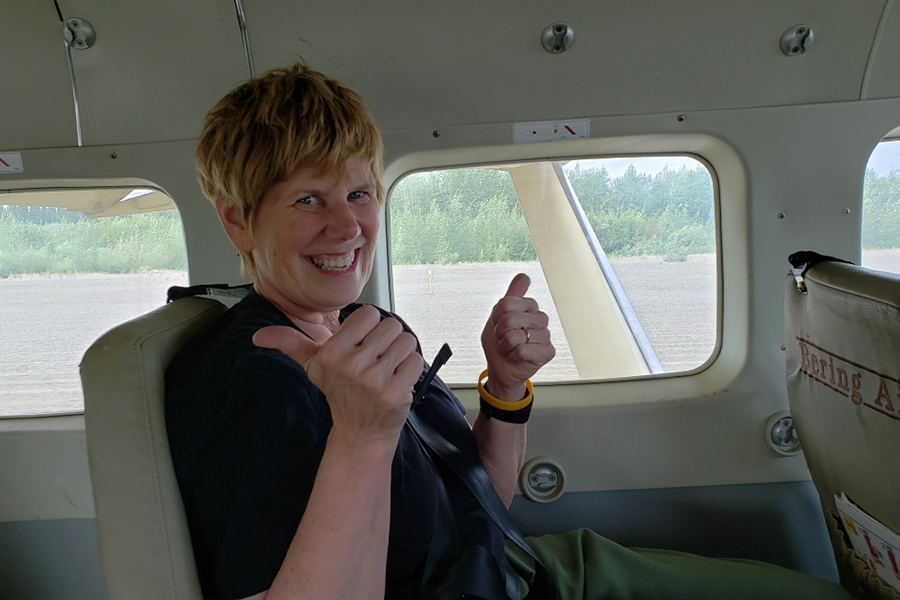
During an Alaskan trip, Key took a small plane to Gates of the Arctic National Park. It was incredible, but she didn’t see the snow-capped mountains she was expecting.
Her pilot told her, “You won’t see glaciers anymore in Gates of the Arctic.”
Key asked him if he knew of an organization where she could donate potential proceeds of a book. The answer was him. It would fund additional flights for him to show more climate scientists and, crucially, decision-makers the changes he’s been witnessing.
Back in Oregon, Key saw other signs of environmental problems at her courtside seat to the wildfires we only see on the news in Virginia.
When asked to lead hikes during that time, she worried about the air quality and people’s health. So Key invited the person who issued the environmental outlooks to speak with the rangers.
That led to the next stage in Key’s career — firefighting.
As an Air Resource Advisor, Key now makes those air reports from the middle of the encampment where all the firefighters and other staff stay.
The position is a good fit. It continues to fuel Key’s love of travel which she still enjoys even while protecting the places she goes.
Secondly, it offers more flexibility than her ranger gig. It requires long days (16 hours) but for two weeks at a time, allowing other trips between firefighting.
Finally, there’s an unexpected perk: The food is delicious, maybe too delicious.
“The catering companies are contractually obligated to provide 3,000-calorie meals.” That’s because firefighters do so much physical activity they can lose weight on a 9,000-calorie-a-day diet.
“My work is mostly a desk job, so I have to be careful,” she laughs.
Key’s duties include collecting measurements, creating reports and informing and advising the public and firefighting team of the conditions. Sometimes, that involves public briefings.
Unfortunately, some of that work is starting to come home. Last year, Key had her first Virginia assignment.
“With climate change and also with insect damage, we’ve lost a lot of trees so there is a lot of fuel on the forest floor… it would not surprise me to see more smoke in Virginia in the future.”
She warns that we should have a fire plan here to protect kids and others from air pollution and other issues, much like we have them for winter weather, “and like fixing your roof, it’s best to do it when it’s not raining.”
Margaret Key has led a fascinating life in service to the environment and, by extension, all who live in it, and in a way, it all started with that science project.
She encourages those kids in school she’s advocating for to take the time for that extra project when it comes up, because “it really can help show employers down the road what your interests and abilities have been.”
And you never know where that might lead.
The story above is from our March/April 2024 issue. For more stories like it, Subscribe Today. Thank you!